
M-Files vs OpenText
M-Files and OpenText both offer enterprise-grade document management and content services capabilities, but they are built on fundamentally different approaches to managing information.
M-Files uses a metadata-driven, context-first architecture that connects content across systems. OpenText is a traditional enterprise content management platform built around repositories, modules, and structured implementations.
This distinction impacts usability, deployment complexity, scalability, and long-term value.
M-Files vs OpenText: Which Is Right for You?
| M-Files | OpenText | |
|---|---|---|
| Best fit | Metadata-driven document management that helps users find information regardless of where it’s stored | Enterprise content management for large organizations with complex requirements and dedicated IT resources |
| Processes | Workflow and document automation to streamline document-centric processes | Structured workflows that typically require configuration and IT involvement to implement and maintain |
| Governance | Built-in security, permission controls, and compliance capabilities | Comprehensive records management capabilities, often requiring additional setup and administration |
| Intelligence | AI-powered features that automatically classify and organize information | AI capabilities available through add-ons or configuration, with limited out-of-the-box automation |
| Integrations | Connects with systems like CRM and ERP to improve information accuracy | Integrates with enterprise systems but typically involves more complex setup and customization |
Where M-Files Stands Out vs OpenText
| Key Capability Difference | M-Files | OpenText | Business Impact |
|---|---|---|---|
| Information Architecture |
 Metadata-driven architecture where content is organized by what it is
|
 Repository-based architecture with structured content stores and modules
|
Metadata-first architecture improves scalability and reduces duplication, while traditional ECM structures can become complex and rigid over time |
| Content Organization |
Dynamic views allow one document to exist in multiple contexts without duplication
|
Content organized within repositories, folders, and application layers
|
Improves visibility and eliminates duplication, especially in complex, multi-department environments |
| Search and Retrieval |
Contextual, metadata-driven search across systems
|
Search across repositories with indexing and structured queries
|
Faster access to relevant information across systems versus searching within predefined structures |
| Workflow Automation |
Metadata-triggered and lifecycle-based workflows
|
Advanced process automation and case management tools
|
M-Files provides more adaptive and flexible workflow automation tied to document state, business context and content lifecycle, where OpenText embeds documents directly into system-driven business processes |
| AI in Content Management |
Built-in AI for auto-classification, metadata enrichment, and workflow automation
|
AI capabilities available through OpenText Aviator and extended modules
|
AI improves efficiency and data accuracy, with M-Files focusing on embedded intelligence rather than requiring additional components |
| Microsoft Teams Experience |
Deep Microsoft 365 integration including Teams, Outlook, SharePoint, and Azure
|
Integrations available but not native to the Microsoft ecosystem
|
Native Microsoft experience improves user adoption and enables seamless workflows within familiar tools |
| Line of Business Integration |
Connects to CRM, ERP, and other systems without requiring migration
|
Integrates through APIs, connectors, and platform extensions
|
M-Files enables a unified view across systems, without requiring more structured integration and greater implementation effort |
| Deployment and Flexibility |
Cloud, on-premises, and hybrid deployment options
|
Cloud, on-premises, and private cloud options with enterprise configuration
|
M-Files offers flexibility for phased adoption and hybrid environments |
| Access Controls and Auditability |
Dynamic, metadata-driven permissions with full audit trails
|
Role-based security with enterprise-grade audit and compliance controls
|
Dynamic permissions reduce administrative overhead whereas centralized can be strong but inflexible |
| Identity Lifecycle Automation |
Permissions and access evolve automatically based on metadata and content lifecycle
|
Identity and access managed through roles, groups, and external IAM systems
|
Less manual access management and stronger lifecycle based compliance with M-Files, compared to more administratively managed access controls |
| Platform Approach |
Unified, metadata-driven platform connecting content, processes, and systems
|
Modular ECM and content services platform with multiple components
|
M-Files provides a simpler, unified experience with a focused and strategic alignment inside the Microsoft ecosystem, rather than depth and breadth of an ecosystems beyond document management |
Ready to See the Difference?
Talk to an expert and discover why organizations across industries choose M-Files over traditional enterprise content management platforms.

“ We had various systems in place that didn't communicate well with each other, making it hard to track changes and ensure consistency. The biggest reason we chose M-Files was the price. It was significantly more affordable than the alternatives while still offering the functionalities we needed. ”
Mike Dayhoff, Director of Toll Architecture Technology, Toll Brothers
Trusted by 6,000+ organizations worldwide across document-driven industries




Experience the M-Files Advantage
Talk to an expert and discover why organizations across industries choose M-Files over traditional enterprise content management platforms.

Built for Microsoft 365 Environments
Microsoft 365 is where work gets done, but information quickly becomes fragmented and hard to control. M-Files brings structure and context to Microsoft content, ensuring information is governed, searchable, and ready for AI.
With metadata-driven automation across Microsoft 365, M-Files helps organizations reduce risk, work faster, and scale information management with confidence. Trusted by thousands of organizations worldwide, M-Files is proven in complex, enterprise environments.
Context-First by Design
The M-Files Difference: Four Requirements for Modern Work
Put Your Documents to Work
Connects documents across systems so teams always use accurate, trusted information.
Automate Document-Heavy Work
Automates filing, routing, permissions, and retention to reduce manual work and ensure consistency.
Meet Teams Where They Work
Runs natively inside Microsoft 365 so documents stay in familiar tools with consistent governance.
Shape to Your Business
Adapts metadata, workflows, and policies to your unique processes, without custom code.
See How M-Files Can Transform Your Business
How Context-First Work Will Evolve in 2026
Context-First Document Management for Modern Work
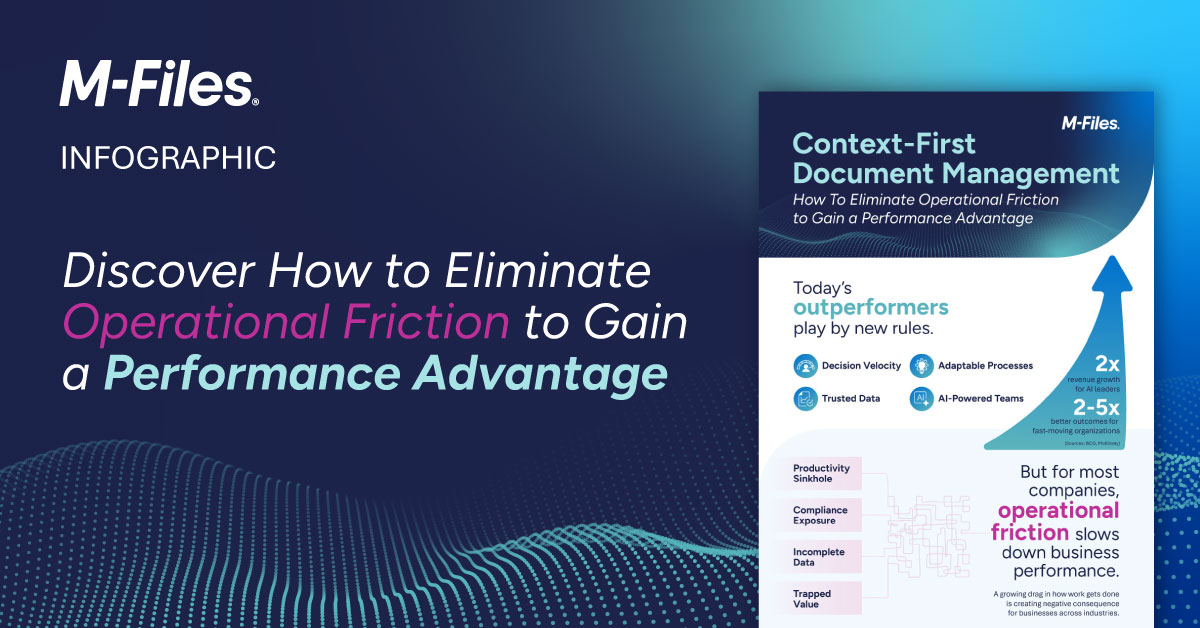
Context-First Document Management
Frequently Asked Questions
Disclaimer: The information presented on this page regarding competitor products, features, integrations, pricing, and capabilities is current to the best of our knowledge as of May 11, 2026. Because competitor offerings may change over time, each comparison page includes a "current as of" date for reference.
All information included has been obtained through lawful and appropriate means, including publicly available sources, and not through any breach of confidentiality obligations or terms of service by us or any third party.
All company names, product names, logos, and trademarks referenced on this page are the property of their respective owners and are used solely for identification and comparison purposes.
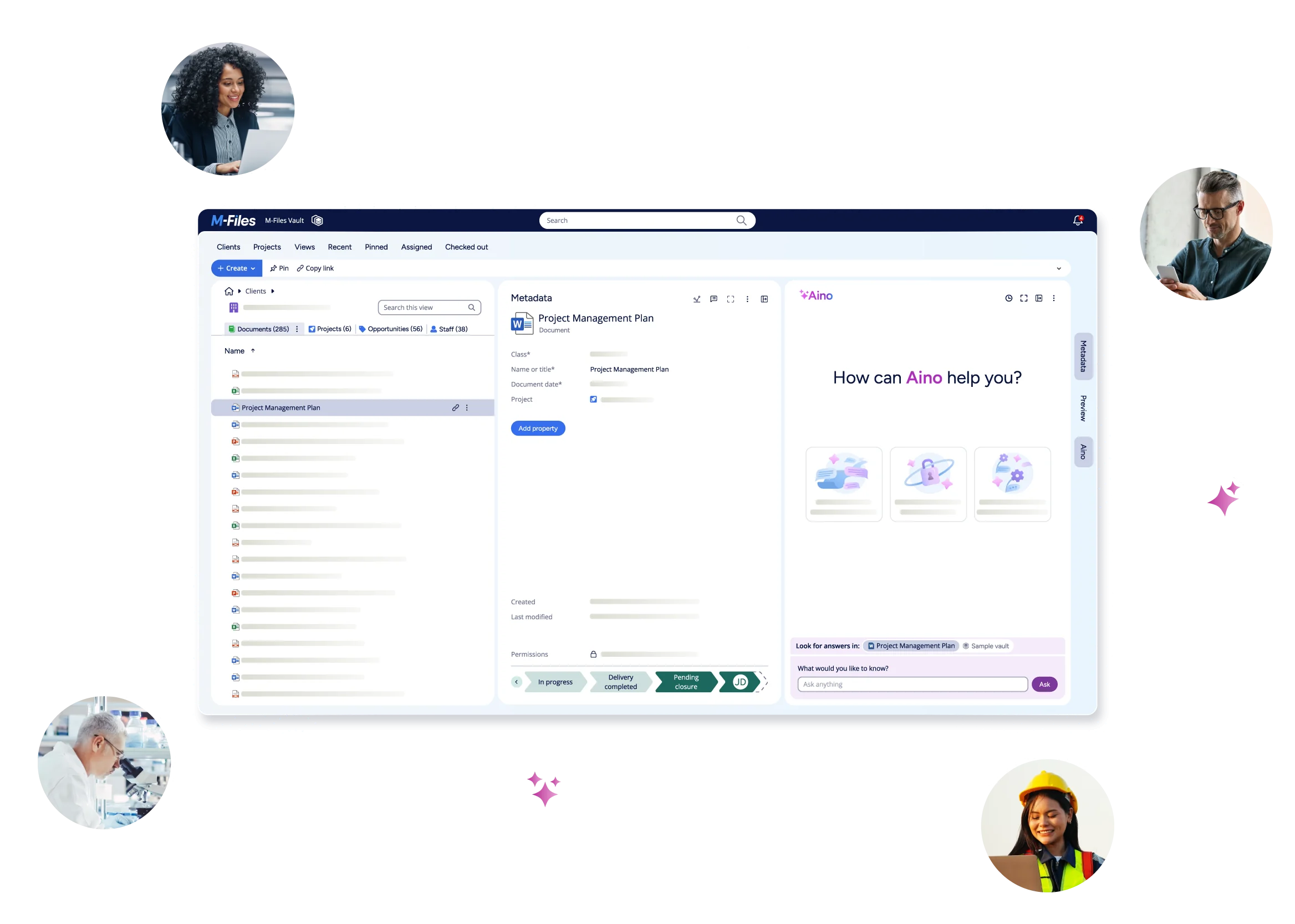
See M-Files in Action